

On standing at the edge of an airway emergency
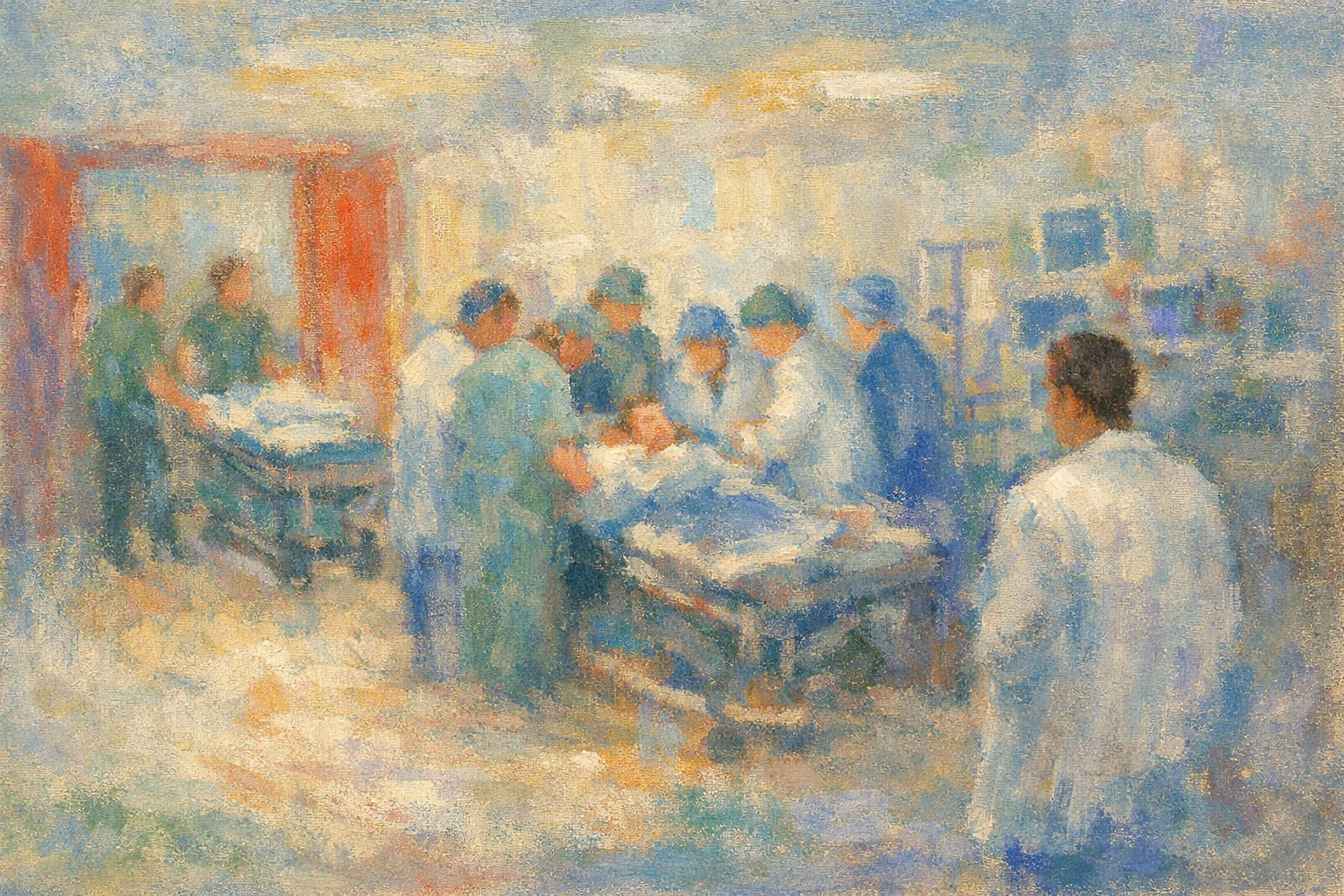
I was dozing off during the orientation tour of the emergency department when the red resuscitation doors burst open.
An ambulance crew wheeled in a critically sick patient. We were in a major trauma centre in metropolitan Sydney standing in Resus – the space reserved for those closest to death.
The atmosphere shifted instantly. The room tightened.
“Age. Mechanism. Injuries”
The trauma consultant spurt a rapid handover. Age. Mechanism. Injuries. A suicide attempt at home with a knife. Deep lacerations to both wrists and the anterior neck. The airway had been breached and the patient was found to be hypoxic.
Oxygen, IV access and drugs were prepared.
The anaesthetist arrived. The ENT team arrived. Each scanned the layout in seconds, mapping out their precise approach.
I peered from the periphery, behind the ranks as a junior doctor, acutely aware of my own inexperience. What struck me was the drama and the coordinated response. Expertise and effort organised itself around each failing organ. The collective weight of brain power in the room was immense – there were years of training present in the room. And the situation was now controlled.
As the patient stabilised, I also began to settle. Chaos had been dealt. Hesitation had been defeated, and decisions were made in seconds. To be in that position felt distant yet strangely compelling.